
Textured and filled areas
Surface texture can change how soil collects and how the floor appears after cleaning. Tell us whether the stone is filled, unfilled or simply unknown so the inspection can clarify the condition.
A clear first step
A free consultation and suitable test spot let you see how the proposed treatment responds on your floor. We explain the scope and price before you decide, including any marks or areas that may need a different approach.
Your preferred finish matters. Bring installation details, a care sheet or the stone name if you have them; a photograph alone may not confirm the material.
Call for a free consultation(850) 460-5205Tell us the stone type if known, the approximate floor area, your preferred finish and where the problem is most noticeable. Mention previous sealers, cleaning products and any loose or damaged areas.
Highly experienced technicians explain the proposed work and any limits, so you can decide with a clear understanding of the service.
Start with the right diagnosis
Surface texture can change how soil collects and how the floor appears after cleaning. Tell us whether the stone is filled, unfilled or simply unknown so the inspection can clarify the condition.
Entrances and repeated walking paths may look different from sheltered areas. We consider soil and finish wear separately before recommending a treatment.
Holes, missing fill and broken edges are physical conditions. They should be identified in the inspection rather than treated as something cleaning will rebuild.
Real work, real materials
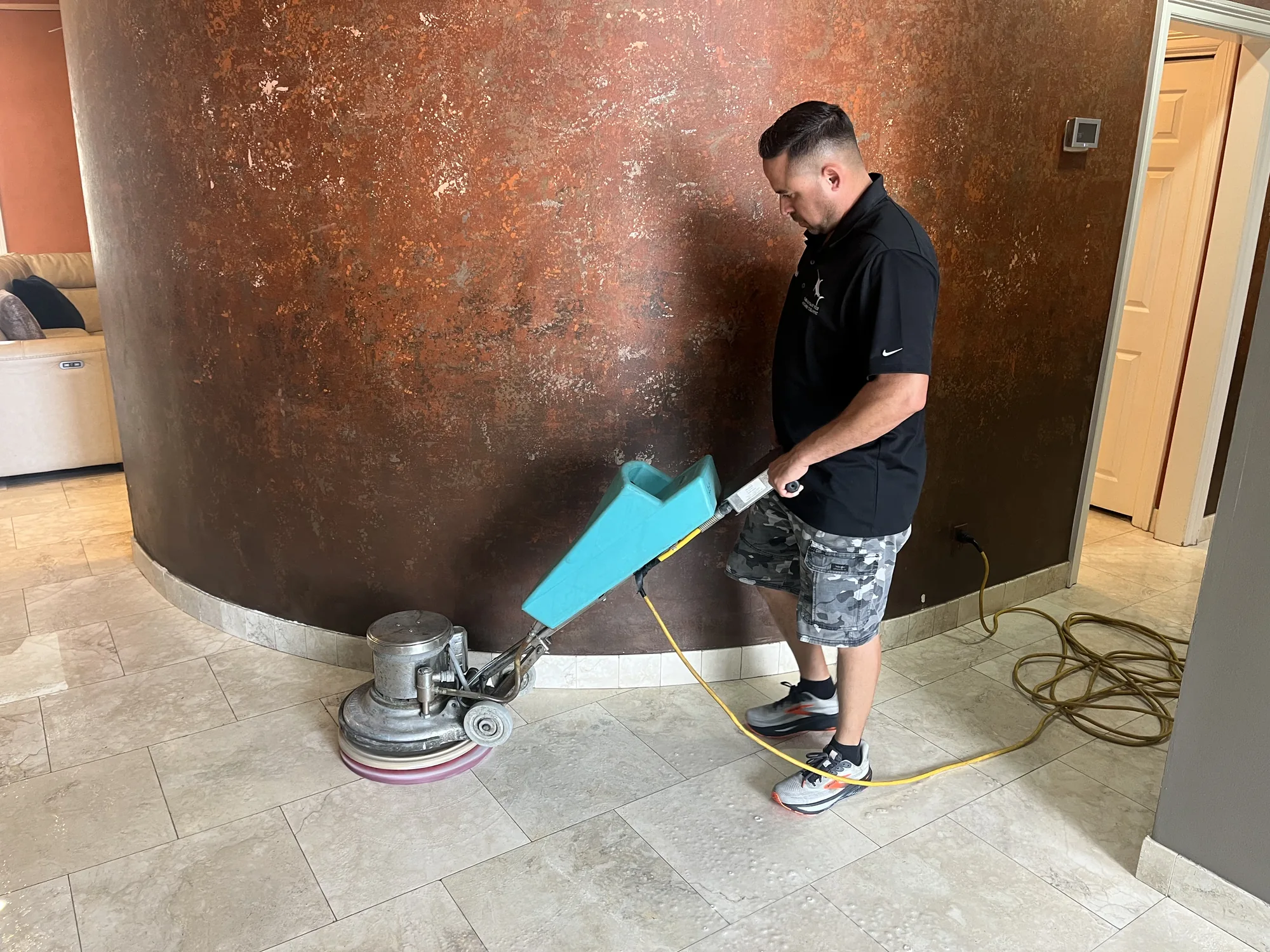
In our documented Panama City project, the homeowner wanted a dull floor, scratches and children’s crayon and paint marks corrected. We used a three-step polishing-pad system, handheld work in difficult-to-reach areas, drying and sealant. The owner reported that the concerns were corrected and the customer was happy.
This is evidence of that natural-stone project, not a material-specific guarantee. The homeowner recalls marble, but the stone species is not confirmed; we keep the example labeled natural stone.
From inspection to handover
Inspect the floor, finish and visible voids or damage. Discuss past treatments and the appearance you would like to achieve.
Use an appropriate test area to discuss the likely change and any limitations. Separate cleaning, finish restoration and sealing decisions.
Complete the agreed accessible areas and review the result. Give care directions suited to the finish and any treatment applied.
Protect your investment
Use a cleaner appropriate to the stone and any applied treatment. Keep loose grit under control and follow the care directions discussed at handover; cleaning habits should match the material rather than a generic tile-cleaning routine.
Ask us about foot traffic, furniture and wet-cleaning restrictions for the actual treatment. A dry-looking floor does not establish that a newly applied sealer has fully cured.
Travertine restoration here does not automatically include filling holes, rebuilding damaged edges or repairing the installation. Those conditions need a separate scope discussion.
Natural variation remains part of the stone. We agree a realistic finish goal; a more even cared-for appearance does not mean every tile becomes identical.
Useful answers before booking
We assess the texture, finish and condition before choosing an approach. Tell us if the floor has open voids, loose areas or missing fill.
Not automatically. Cleaning, polishing, sealing and physical repair are separate decisions; clarify any hole or edge work before booking.
Natural variation can remain even after appropriate treatment. We discuss improvement and consistency without promising an identical color or pattern across the floor.
We assess the stone and previous treatments and explain whether sealing is suitable. It is not added automatically or presented as a replacement for repairs.
Yes, remote access is routine for our team. Agree access, the work area and how you want before-and-after photos shared when booking.
Away from your Destin property? We routinely coordinate door-code or lockbox access, take before-and-after photos, and send an online payment link. Agree access and the work area with us when booking.
Tell us about your surface and the change you want to see. We will help you understand the next step, scope and price.
Call for a free consultation(850) 460-5205